Complete guide to taking an ImmiCard passport photo
Quick read - for people in a hurry
- Size: Printed photos must be 35–40 mm × 45–50 mm, with head size 32–36 mm. Digital photos (ImmiAccount) must be JPEG, no larger than 500KB, 1200x1600 pixels.
- Background: Plain white or light grey, no shadows, patterns, or objects.
- Quality: Sharp, in focus, natural skin tone, no filters or retouching. Printed photos must be on matte/semi-matte paper.
- Expression & Position: Neutral face, eyes open, mouth closed, head straight and centered (70–80% of frame).
- Appearance: Darker everyday clothing; no uniforms, hats, large jewellery, or tinted glasses. Head coverings only for religious/medical reasons.
- Babies: Same rules, but partially open eyes and open mouth allowed. No hands, toys, or visible support. Background can be a light sheet.
- DIY Option: With the Smartphone iD app, you can take your ImmiCard photo at home, get AI + expert verification, and receive instant digital copies or printed versions delivered — all with a compliance guarantee.
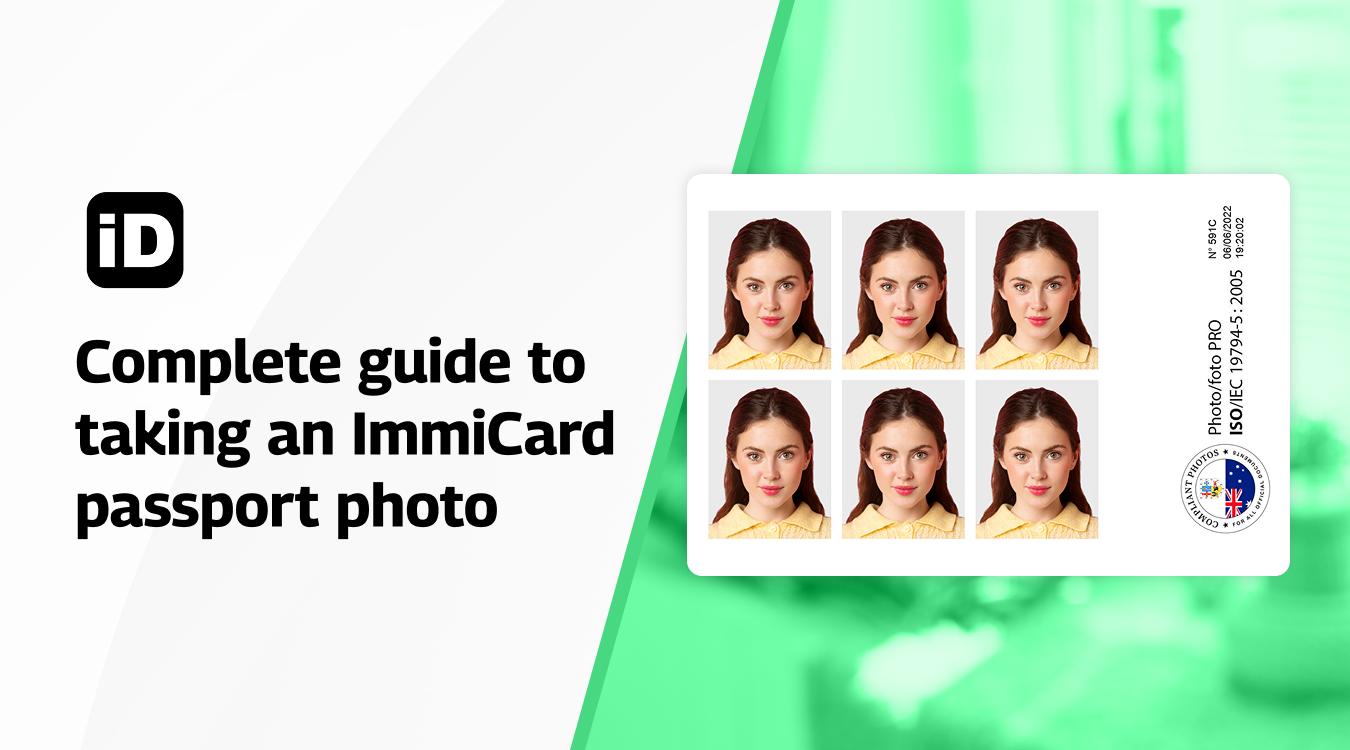
An ImmiCard is a unique identification card issued by the Australian Department of Home Affairs to non-citizens, providing evidence of a visa or migration status. When applying for an ImmiCard, you may need to provide a passport-style photo. This guide will walk you through the requirements and steps to take the perfect ImmiCard passport photo.
Last update: 09/30/2025
Table of contents
1. The ImmiCard Photo Requirements
3. DIY ImmiCard Passport Photos: A Convenient Alternative at Home!
The ImmiCard photo requirements
The passport photo for the ImmiCard must adhere to specific guidelines to ensure it is accepted. Below are the general requirements:
Size
Printed Photo
- Dimensions: 35 mm – 40 mm wide × 45 mm – 50 mm high
- Head size: 32 mm – 36 mm from chin to crown
- Paper type: High-quality photo paper (matte or semi-matte finish, not glossy)
- Number required: Two identical color photos, less than 6 months old
Digital Photo (for online submission via ImmiAccount)
- File format: JPEG (.jpg)
- File size: 500KB
- Resolution: 1200x1600 pixels
Background
The background must be plain white or light grey, with no patterns, textures, or objects visible. It should be completely clear and contrast with your clothing. Shadows on the wall are not allowed. If you’re taking it at home, use a white wall or hang a light sheet behind you.
Photo quality
Your photo needs to be sharp, clear, and in focus. No blurriness, no pixelation, and no grain. The color must be natural and represent your true skin tone. Avoid using filters or editing software to “touch up” your face — no retouching of scars, wrinkles, or marks is permitted. The photo has to be printed on high-quality photo paper with a matte or semi-matte finish, never on an inkjet printer.
Head position and expression
Sit facing the camera directly, with your head straight and centered in the frame. Don’t tilt your head or turn it sideways. Keep a neutral expression — that means no smiling, no frowning, and no raised eyebrows. Your mouth should stay closed and your eyes must be open, looking straight at the camera.
Hair
Your hair must not cover your face or eyes. If you have bangs, make sure they don’t hang over your eyebrows. Long hair should be tucked behind your ears or pulled back so your cheeks and jawline are visible. The goal is for your entire face, from the chin to the crown, to be clearly shown.
Makeup
Makeup is allowed, but it should be natural. Avoid heavy foundation, glitter, or shiny powders that can cause reflections. Bright lipstick or dramatic eye makeup isn’t recommended either, as the photo must look like your everyday appearance. Think “fresh, natural look” rather than “glam photo shoot.”
Accessories and jewellery
Passport photos must be simple. Large earrings, shiny necklaces, or anything that reflects light should be avoided. Jewellery is fine only if it doesn’t hide your features or create glare. Headphones, hairbands, or any decorative accessories are not allowed.
Head coverings
Hats and head coverings are not allowed, except if they are worn daily for religious or medical reasons. If you do wear one, it must be plain and cannot obscure any part of your face. Your forehead, cheeks, eyes, and chin must all be fully visible.
Glasses
Wearing glasses is strongly discouraged, but if you must wear them for medical reasons, there are strict rules. The frames cannot cover your eyes, there can’t be any glare on the lenses, and tinted or colored lenses are not accepted. Sunglasses are strictly forbidden.
Clothing
Choose everyday clothes in darker or mid-tone colors so you don’t blend in with the light background. Avoid white or very light tops. Uniforms and camouflage clothing are not permitted. Clothes should be free of distracting logos, patterns, or offensive text.
Lighting
The photo must be evenly lit across your face and background. No harsh shadows, no glare, and no uneven brightness. Natural daylight works best, but if you’re indoors, place the light in front of you, not behind or above. The lighting should make your skin tone look natural and your features clearly visible.
Recency
The photo should be taken within the last 6 months to reflect your current appearance.
With our app, you can be 100% confident that your Passport photo is in accordance with the Australian government’s standards. If it isn’t, then we’ll give you a full refund.
Requirements for babies and young children
The requirements for Australian baby or infant immicard photos are largely the same except for:
- Eyes Open: The baby’s eyes should be open and looking towards the camera. However, for newborns, partially closed eyes may be acceptable.
- Neutral Expression: Ensure the baby has a neutral expression, with no smiling, frowning, or crying. For infants (under three years of age), a photo with an open mouth is acceptable
- No Support Visible: The child should be photographed alone, with no toys, hands, or other objects visible. If necessary, a parent can hold the baby from behind, but their hands must not be visible in the photo.
- Background: Use a plain, light-colored blanket or sheet as the background. Lay the baby on its back if photographing from above.
- Head Position: The baby’s head should be centered and facing the camera directly. Avoid tilting the head too much.
Common mistakes to avoid
- Incorrect Background: Make sure the background is plain and light-colored.
- Shadows: Avoid shadows on your face or background.
- Glare on Glasses: Ensure no glare or reflections on your glasses if worn.
- Overexposed/Underexposed: Ensure the photo is not too bright or too dark.
- Wrong Size: Verify the dimensions of your photo and your face within the photo.
DIY ImmiCard passport photos: a Convenient alternative at home!
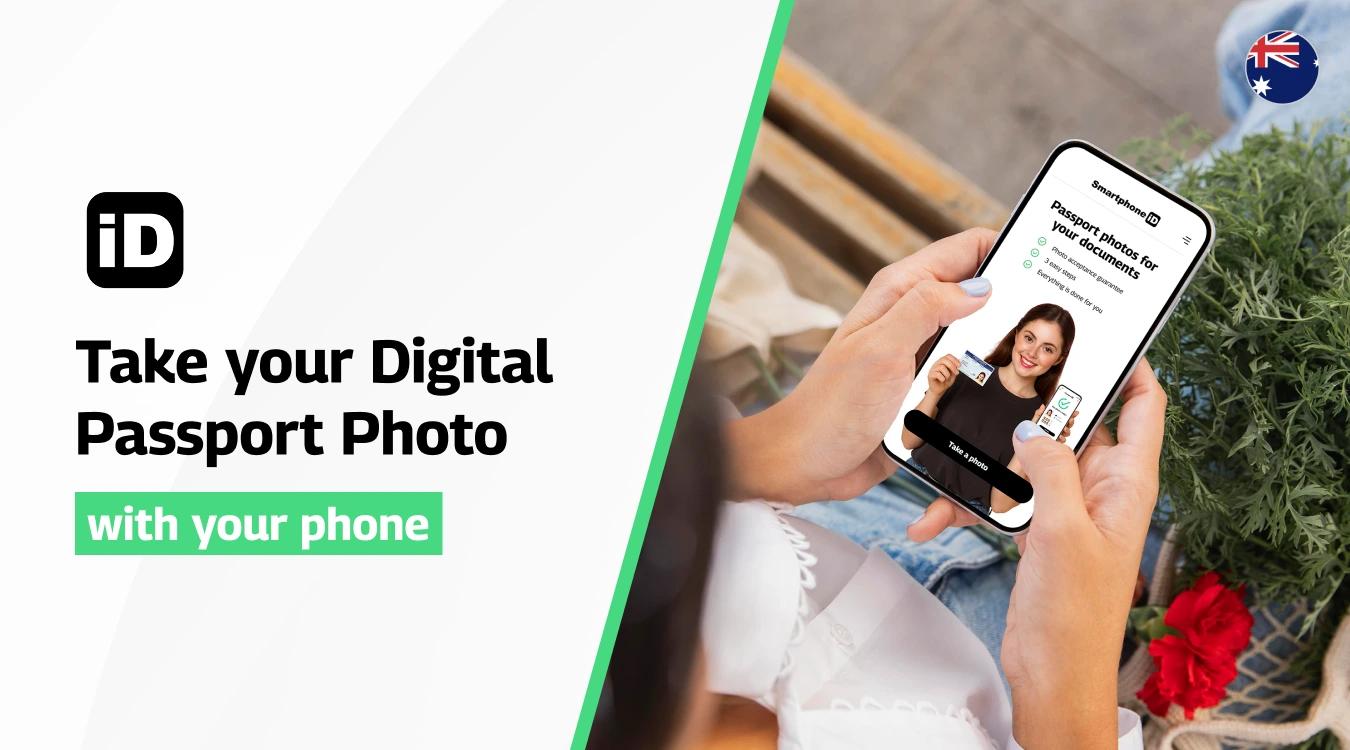
Some people simply don’t have the time to visit a photo studio or service location to get their passport or ID photo taken. The good news? This problem is easily solved with the Smartphone iD app.
With Smartphone iD you can create your ID photo online in just minutes. Every photo comes with a 100% compliance guarantee, meaning it will meet Australian government standards — or you’ll get your money back.
Tips for a successful Australian permanent resident evidence photo
- Choose the right clothing
Wear solid, darker-colored clothing that contrasts with the background. Avoid white or pale colors that may blend into the background. Hats, sunglasses, or accessories that obscure your face are not allowed. - Ensure proper lighting
The photo must be evenly lit, with no glare or shadows on your face or background. Natural daylight works best — try near a window or outdoors on an overcast day. - Maintain a neutral expression
Keep a natural, neutral look: mouth closed, eyes open, no smiling, frowning, or exaggerated expressions. - Position yourself correctly
Face the camera directly with your head centered and straight. Your face should cover about 70–80% of the photo frame. - Double-check the requirements
Make sure your photo meets all Australian government standards — size, background, resolution, and recency. Smartphone iD ensures compliance automatically.
Step-by-step guide: how to use Smartphone iD for your ImmiCard photo
- Open the Smartphone iD app and tap “Take a Photo.”
- Select Australia as the country and choose ImmiCard as the document type.
- Place your phone on a stable surface or tripod, and ensure even lighting. A plain white wall works best for the background.
- Follow the app’s real-time AI instructions to position your face correctly. It will guide you to center your head, keep a neutral expression, and ensure hair and ears are visible.
- Capture your photo using your phone’s camera. You can retake it as many times as you like until you’re satisfied.
- The app will automatically adjust and remove the background, and you can preview your photo instantly.
- Submit your photo through the app.
- Our AI system and expert team will verify your photo to ensure it meets all official Australian requirements.
- Once approved, your photo is 100% guaranteed. You’ll receive it instantly by email in digital format, ready to upload — and you can also order compliant printed copies delivered to your home.
Sources
https://immi.homeaffairs.gov.au/visas/already-have-a-visa/immicard/step-by-step


.bbc9bc36.svg)